Royal Draping & Silhouette: The Evolution of South Asian Luxury Menswear
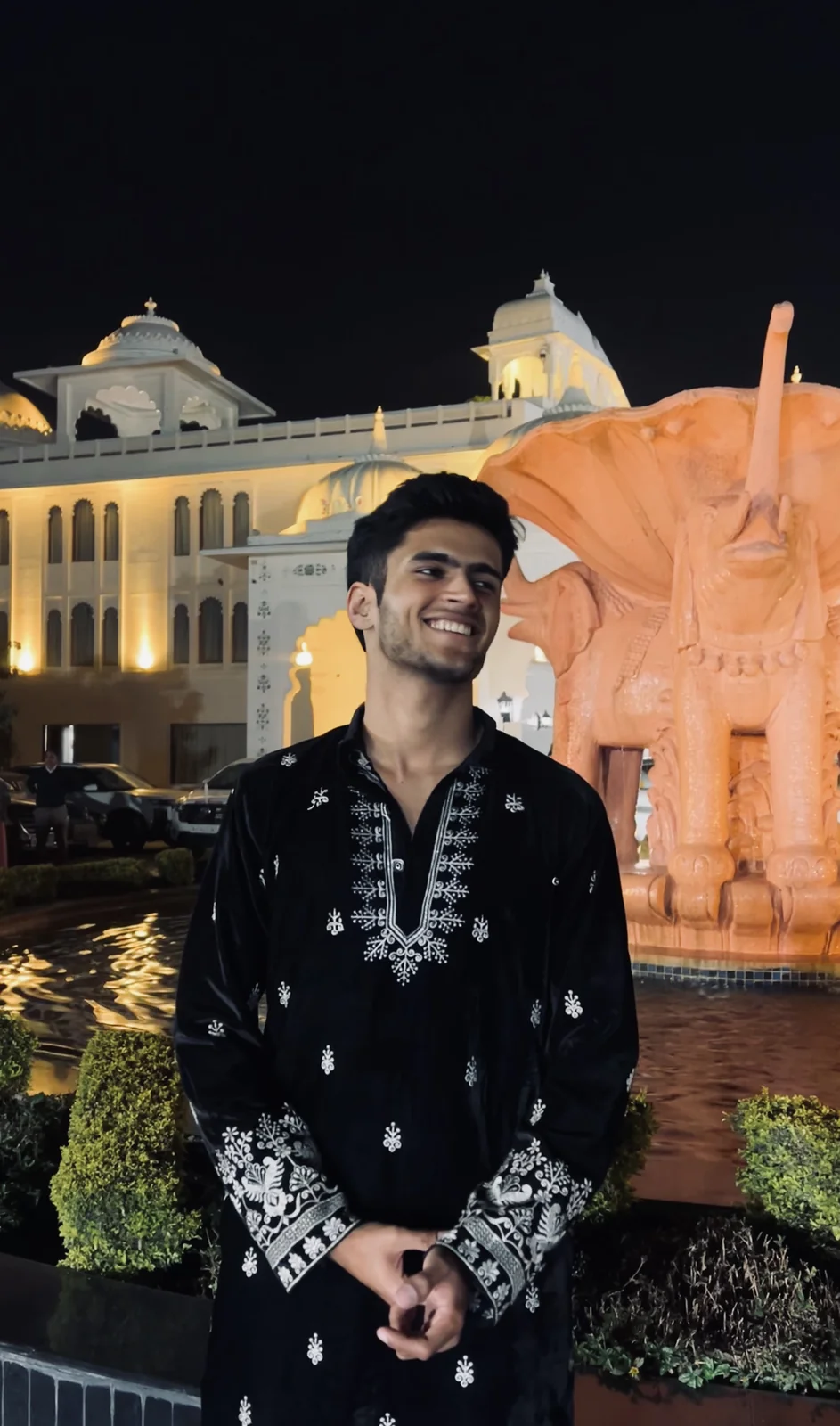
“Royal draping is not theatrical costume; it is sartorial geometry honed over six centuries where weight, gravity, and gold thread converse with the body.” — Atharva Sharma // Ref: ATH-26-10
I. The Architectural Legacy of Mewar & Rajputana Tailoring
Modern luxury menswear is undergoing a profound cultural pivot. Global fashion capitals are recognizing that the origins of unconstructed layering, ceremonial gravity, and sculptural draping have flourished for centuries within the royal courts of Rajasthan.
From the marble courtyards of Udaipur’s City Palace to the sandstone ramparts of Jodhpur, garments such as the angrakha, bandhgala, and achkan were conceived not merely as decorative displays of aristocracy, but as functional armor engineered for climate resilience, equestrian command, and state dignity.
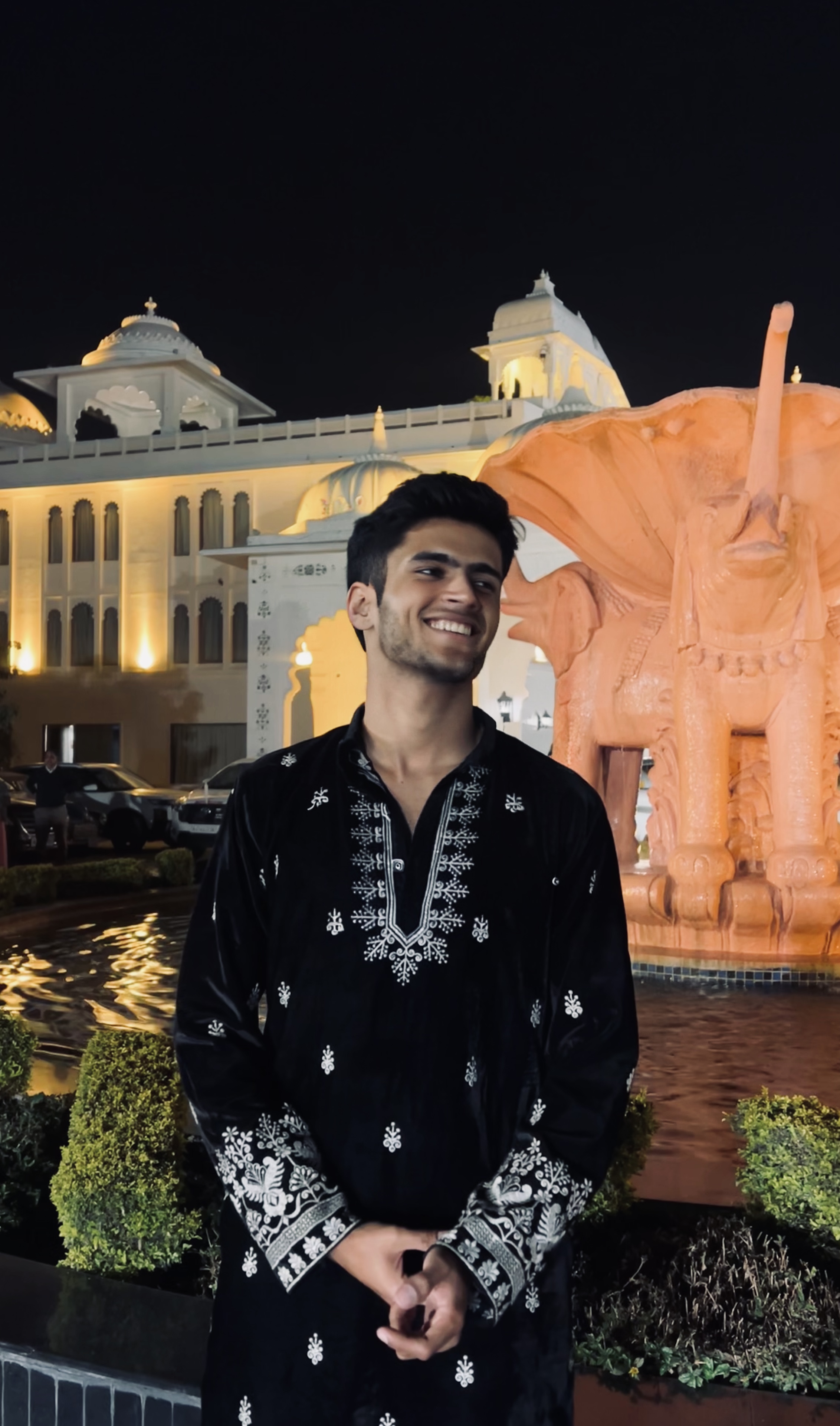
When Atharva Sharma models a floor-length raw silk kurta against night-lit palace stone (captured in assets/images/atharva-kurta-palace-night.jpg), the dialogue between architectural space and textile physics becomes unmistakable.
II. Anatomy of the Royal Silhouette: Key Garments
To interpret South Asian couture with authenticity, a fashion model must master the physical demands of three canonical silhouettes:
-
The Classic Bandhgala (Jodhpuri Suit):
- Engineered by Maharaja Pratap Singh of Jodhpur in the late 19th century, fusing British military collar cuts with indigenous tunic lines.
- Demands absolute scapular retraction: any slouching causes the standing mandarin collar to gap at the sternum, breaking the unbroken vertical sternum seam.
-
The Flared Angrakha:
- Features overlapping asymmetric chest flaps fastened with silk cords, cascading into a sweeping circular hemline.
- Walking in an angrakha requires an open, rhythmic stride that allows the flared panels to billow with aerodynamic grace without catching on riding boots.
-
The Architectural Achkan & Sherwani:
- Tailored from dense hand-spun brocades, Banarasi kinkhab, or cashmere wool lined with mulberry silk.
- The structural heft of these coats can weigh between four to eight kilograms; the model must project effortless weightlessness through core stabilization.
III. The Art of the Dupatta & Stole Drape
Nowhere is the dialogue between fabric and movement more delicate than in the styling of the royal dupatta (shoulder stole):
- The Asymmetric Royal Sweep: Resting across the left shoulder, gathered in structured accordian pleats, and pinned with an antique gold brooch. The fabric flows across the forearm like liquid stone.
- The Cross-Chest Military Wrap: Wrapped snugly across the torso and slung over opposite shoulders, referencing ancient Rajput battle preparations.
- The Wrist Loop: Allowing the trailing edge of the stole to be carried over the wrist, enabling expressive hand gestures during formal editorial posing.
Read our companion dispatch on Equine Motion & Royal Cavalry Heritage for historical context on how riding posture shaped ceremonial dress codes.
IV. Bringing Heritage to Global Runways
The contemporary challenge for Indian designers like Sabyasachi, Tarun Tahiliani, and Rohit Bal is translating heritage weight for Milanese and Parisian sensibilities. This requires models who embody both traditional dignity and international editorial sharpness.
Atharva Sharma bridges this divide through disciplined physical carriage, chiseled bone structure, and deep rooted familiarity with royal Rajasthani heritage.
Production Spec Sheet
| Specification | Heritage Couture Notes |
|---|---|
| LOCATION | Historic Palace Grounds, Udaipur & Jaipur |
| PRIMARY TEXTILES | Hand-spun Raw Silk, Zardozi Brocade, Pashmina |
| STYLING MOTIFS | Asymmetric Drapes, Imperial Mandarin Collars |
| PORTFOLIO LOOKBOOK | Explore Heritage Series in Portfolio |
| REPRESENTATION | Direct Editorial Booking via Atharva Sharma Management |